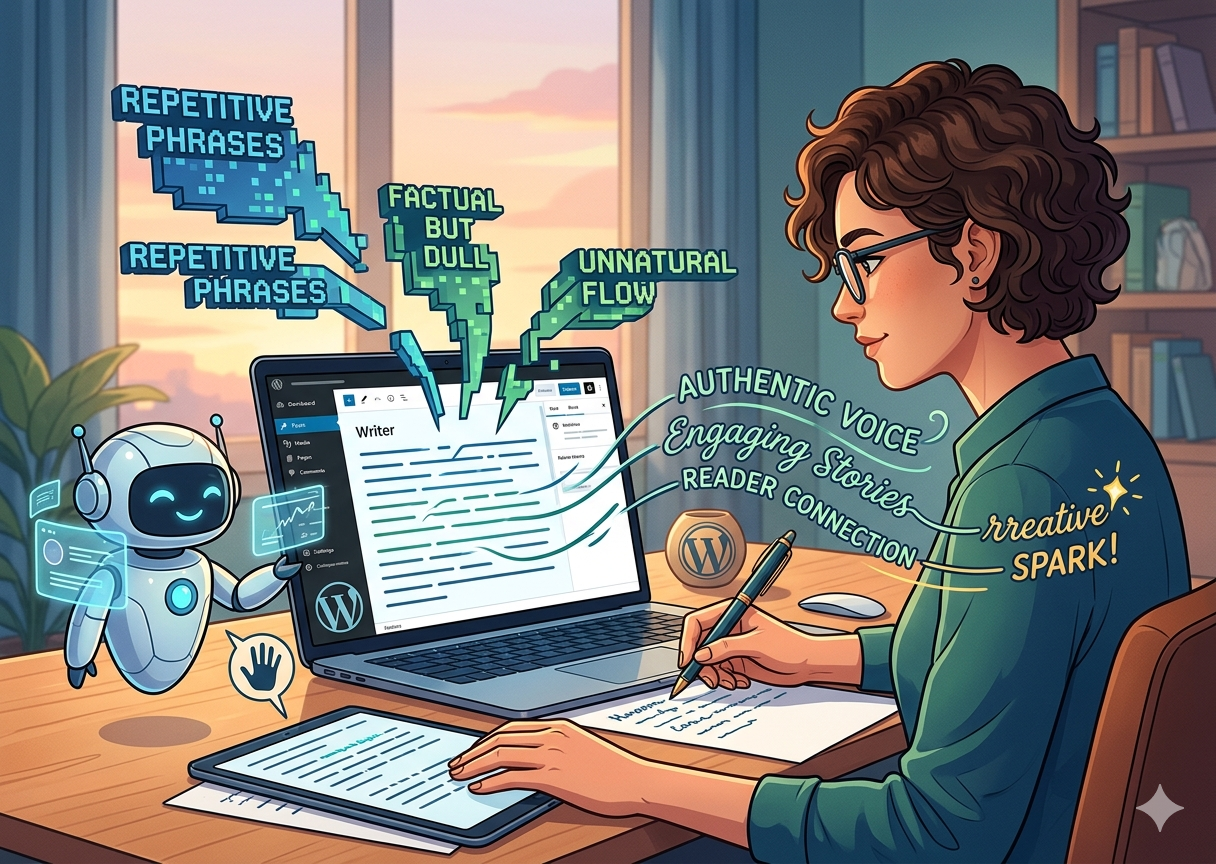
Creating AI content for WordPress has a ‘smell’—readers know it when they see phrases like ‘In today’s digital landscape’. The problem isn’t the technology, but using it as a ghostwriter rather than a tool. For effective results, use AI for structure and outlines, but write the actual copy yourself. Use it for the boring SEO scaffolding, like meta descriptions, where speed is the priority.
The problem isn’t the AI. The problem is using AI wrong.
Most people use AI as a ghostwriter. They type a prompt, publish what comes out, and wonder why their bounce rate tanks. That’s not a content strategy — that’s a liability.
AI Content for WordPress
Here’s what actually works for WordPress content:
Use AI for structure, not voice. Ask it to give you an outline, a list of subheadings, or the three angles on a topic. Then write the actual content yourself. You’ll be 60% faster without sounding like a bot.
Feed it your own writing first. Past posts, Slack messages, emails — give AI your tone before asking it to produce anything. The output is dramatically more human.
Use it for the stuff no one wants to write. Meta descriptions. Alt text. Category descriptions. The boring SEO scaffolding that takes forever and no one reads carefully anyway. AI is perfect here.
Edit everything aggressively. Cut the hedge words. Cut the filler. If a sentence starts with “It’s important to note,” delete it and say the important thing directly.
AI content that goes live with zero editing is almost always a mistake. AI content that goes through a real editorial pass can be genuinely useful. The difference is whether you treat it as a draft or a deliverable.


