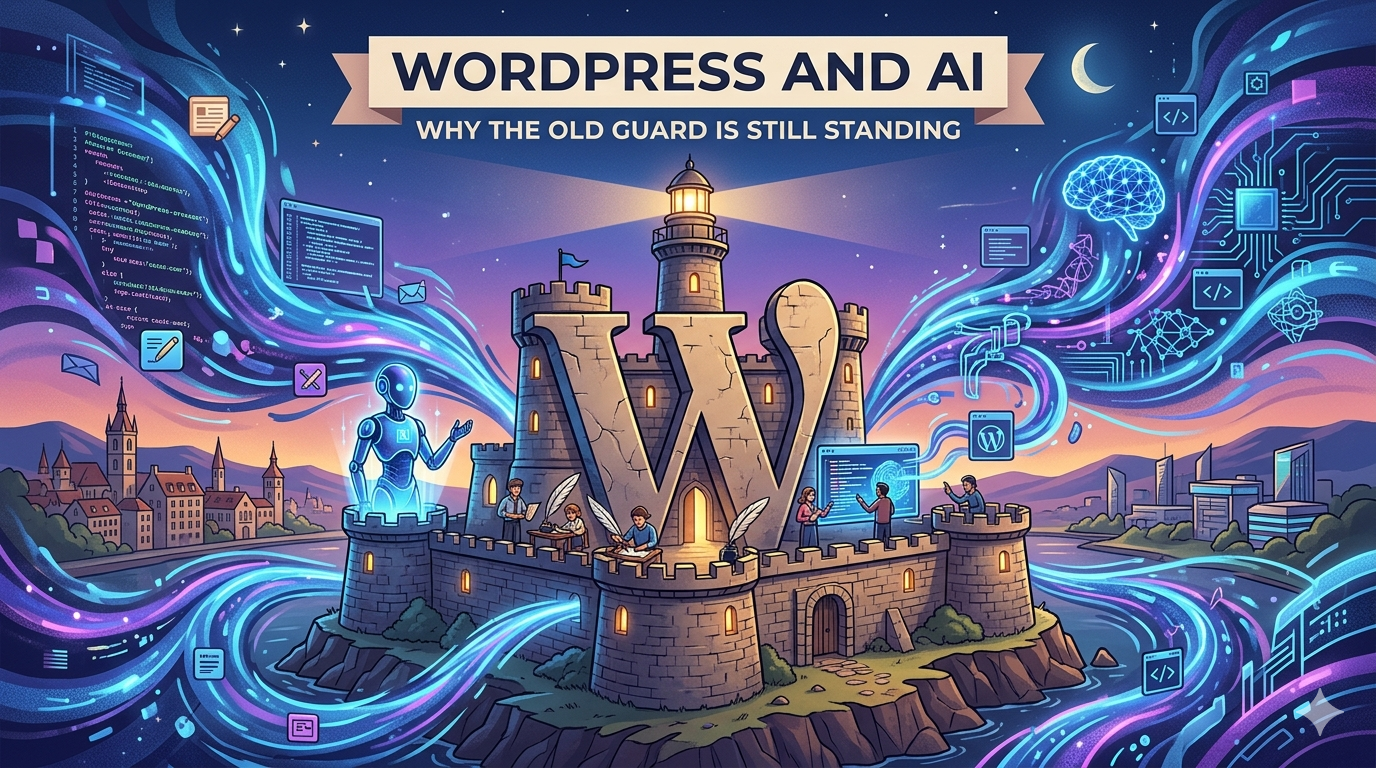
A year ago, many thought AI would hollow out the WordPress ecosystem. Instead, the opposite happened: strategic WordPress AI integration has allowed the platform to absorb these trends. From Jetpack to WooCommerce, the platform didn’t die—it adapted. WordPress wins because it makes AI one of many tools in its kit while maintaining the trust and switching costs that new startups lack.
WordPress AI Integration
What’s happened instead is the opposite: the WordPress economy absorbed AI and kept moving. Automattic added AI features to Jetpack. WooCommerce is building AI into its admin. Elementor shipped a copilot. The platform didn’t die — it adapted.
This is what open-source platforms do. They absorb trends because thousands of developers can independently build on top of whatever is happening. The plugin ecosystem is already littered with AI tools for every conceivable use case. That’s not weakness — that’s resilience.
WordPress also benefits from something AI-native competitors don’t have: trust. Businesses with five or ten years of content on WordPress aren’t migrating to a new AI-first platform because some startup promises a better prompt experience. The switching cost is real. The institutional memory is real.
The places where WordPress is genuinely vulnerable are the edges — new sites with no legacy, simple use cases, budget-conscious clients. That’s the territory AI-first builders will take. And honestly, WordPress is better off without those clients. They were always the most price-sensitive, the most demanding, and the least sticky.
WordPress isn’t winning because it fought AI off. It’s winning because it made AI one of many tools in its kit — and kept everything else that already worked.


